September 26, 2026
Society of Critical Care Medicine · Florida Chapter Annual Symposium
PICS panelist
Contributed the patient and survivor perspective to a panel on post-intensive care syndrome and recovery following critical illness.
Author · Speaker · Critical Illness Survivor & PICS Advocate
An advocate before critical illness. A survivor whose experience gave that work a deeply personal purpose.
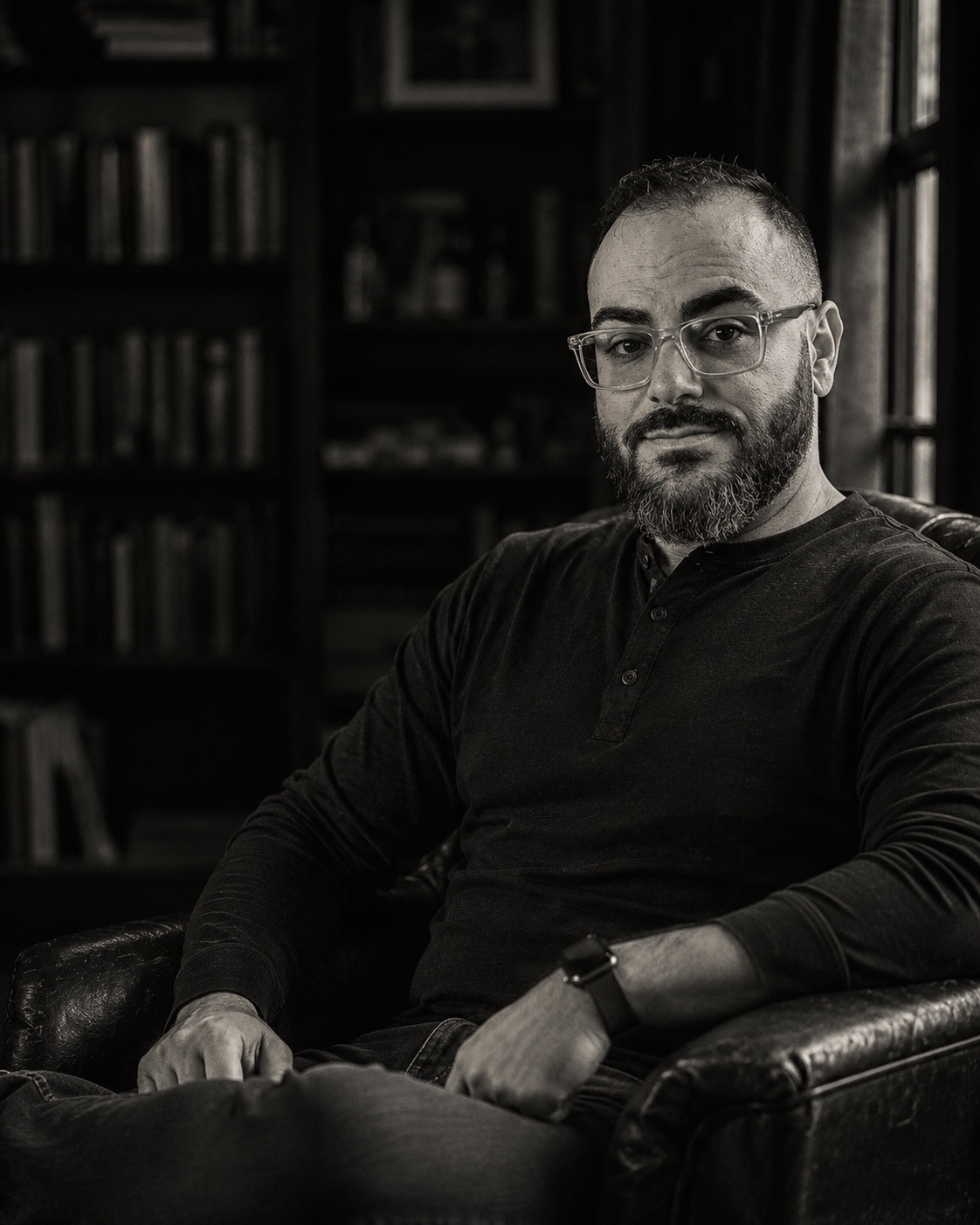
Michael Paul Patrick is the founder of the Life After ICU Initiative, an author, and a critical illness survivor dedicated to making the long-term effects of intensive care more visible. He brings nearly a decade of client advocacy as a trial attorney, a Juris Doctor, and his own experience of recovery to conversations about post-intensive care syndrome (PICS).
Following a car accident in November 2024, Michael underwent cervical spine surgery. An aspiration event led to acute respiratory distress syndrome (ARDS), eight days of mechanical ventilation, and a total of two weeks in intensive care. Recovery brought lasting physical and psychological challenges that reshaped his family life, professional identity, and understanding of survival.
Through his memoirs I See U and I Hear U, public speaking, community advocacy, and peer connection, Michael shares what life after critical illness can involve. He is currently pursuing a master’s degree in Clinical Mental Health Counseling at Keiser University, bringing his experience of medical trauma into a new chapter of study and service.
His work centers on survivors and the people who love them, with a commitment to helping clinicians, researchers, and communities better understand the journey beyond discharge.
Family life, a career in advocacy, intensive care, and the ongoing work of recovery: these photographs trace the experiences behind Michael’s work today.
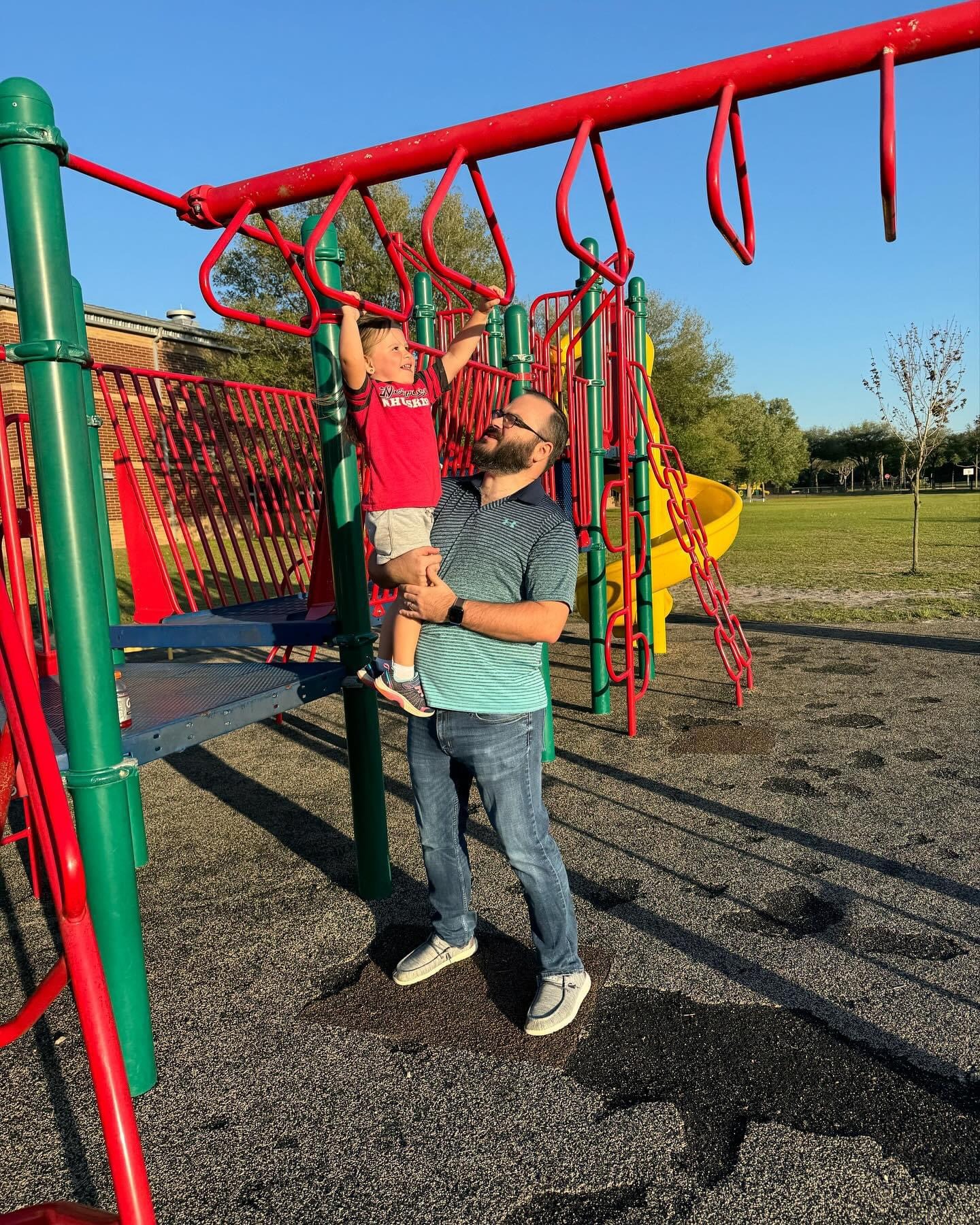
Time with his children was part of Michael’s everyday life. This moment at the playground captures the fatherhood and physical activity that illness would change.
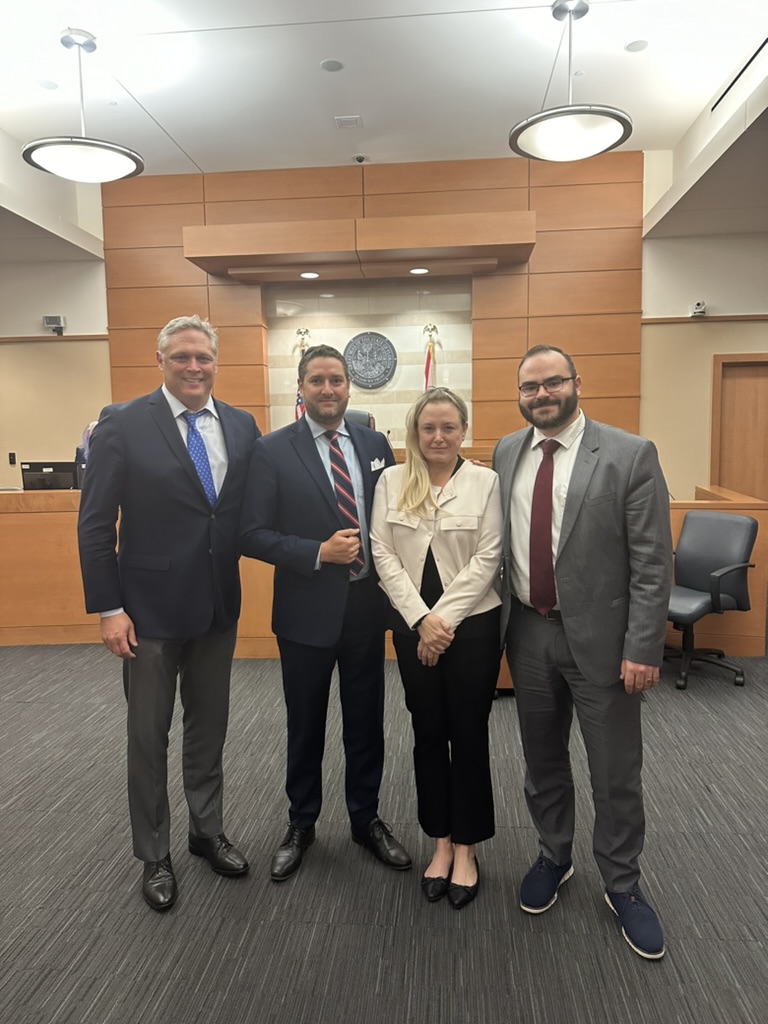
Before critical illness reshaped his professional path, Michael spent nearly a decade advocating for clients as a trial attorney.
Following cervical spine surgery, an aspiration event led to ARDS, eight days on a ventilator, and two weeks in intensive care.
Content note: these optional photographs show Michael receiving intensive care, including intubation and prone positioning, and taking his first steps in recovery.
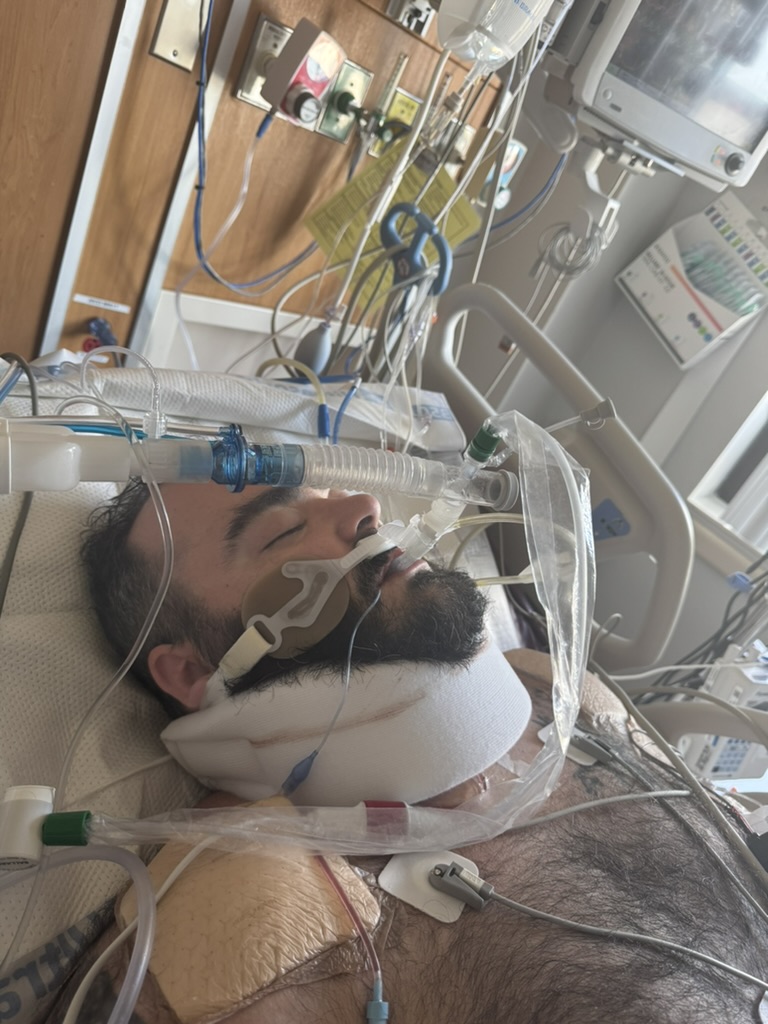
Receiving mechanical ventilation during his ICU stay.
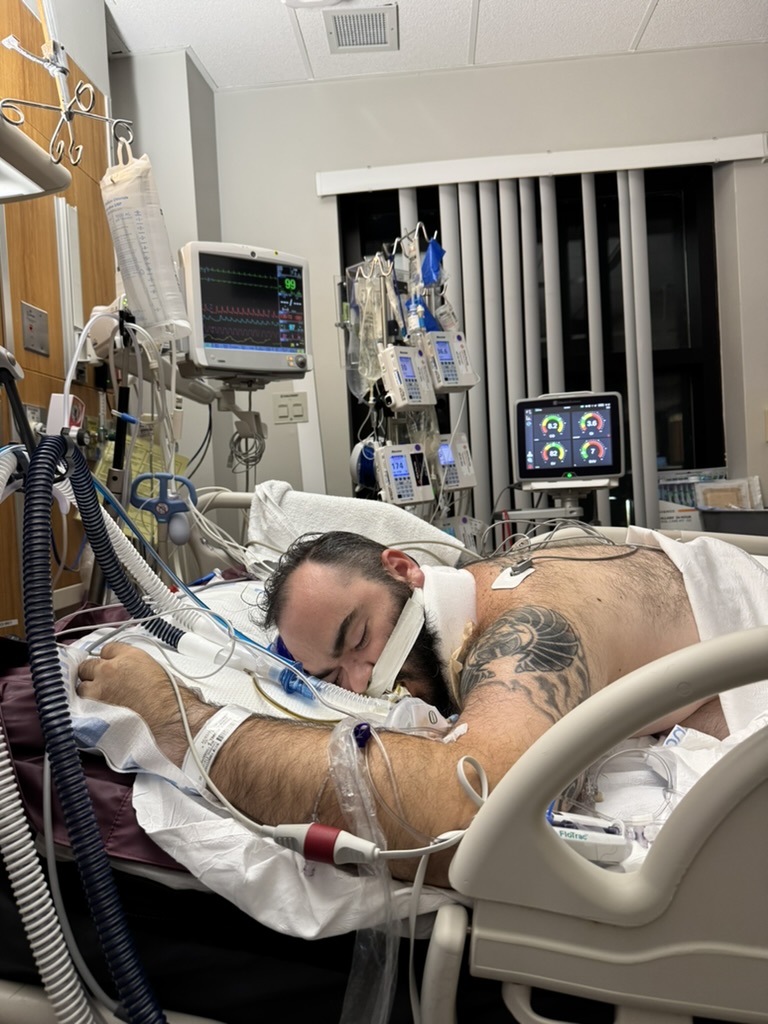
Michael was positioned on his stomach while receiving mechanical ventilation during his treatment for aspiration pneumonia and ARDS.
Aspiration and pneumonia can trigger ARDS. When ARDS is severe, turning a ventilated patient face-down can help air reach more of the lungs and improve oxygen exchange. Proning is a guideline-recommended treatment for severe ARDS; the ICU team assesses each patient’s oxygen levels, stability, and safety to decide when to use it.
Learn more: ATS guide to ARDS · ATS treatment guideline
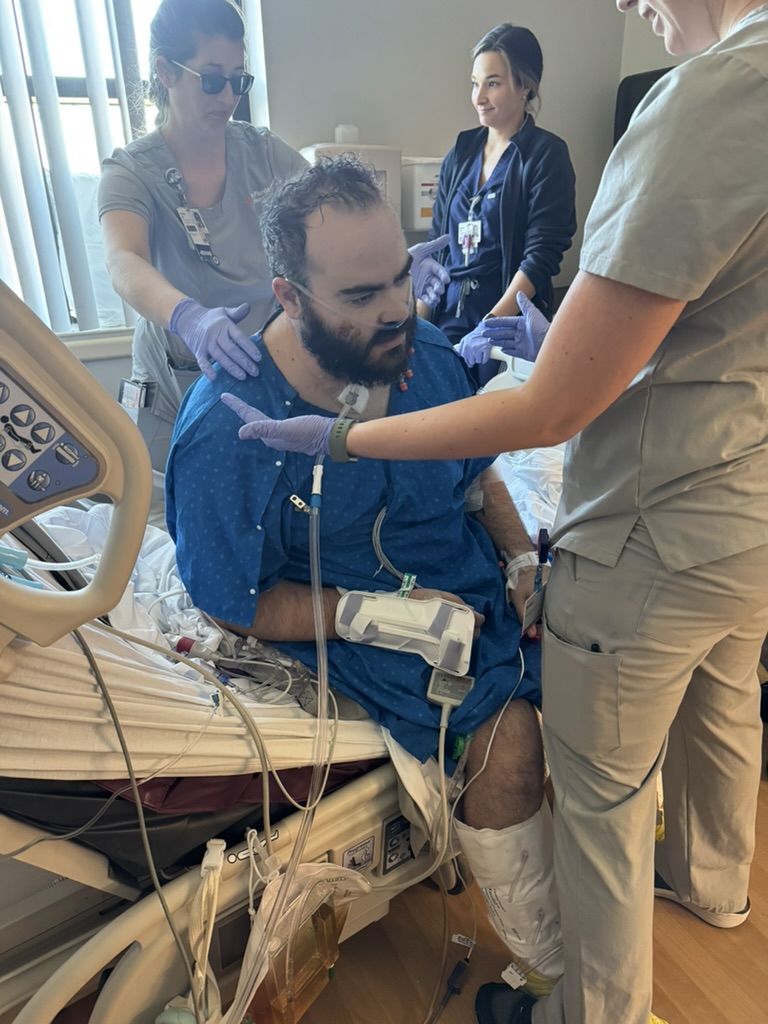
After waking from the coma, Michael needed a team of physical therapists to hold him upright as he sat up for the first time.
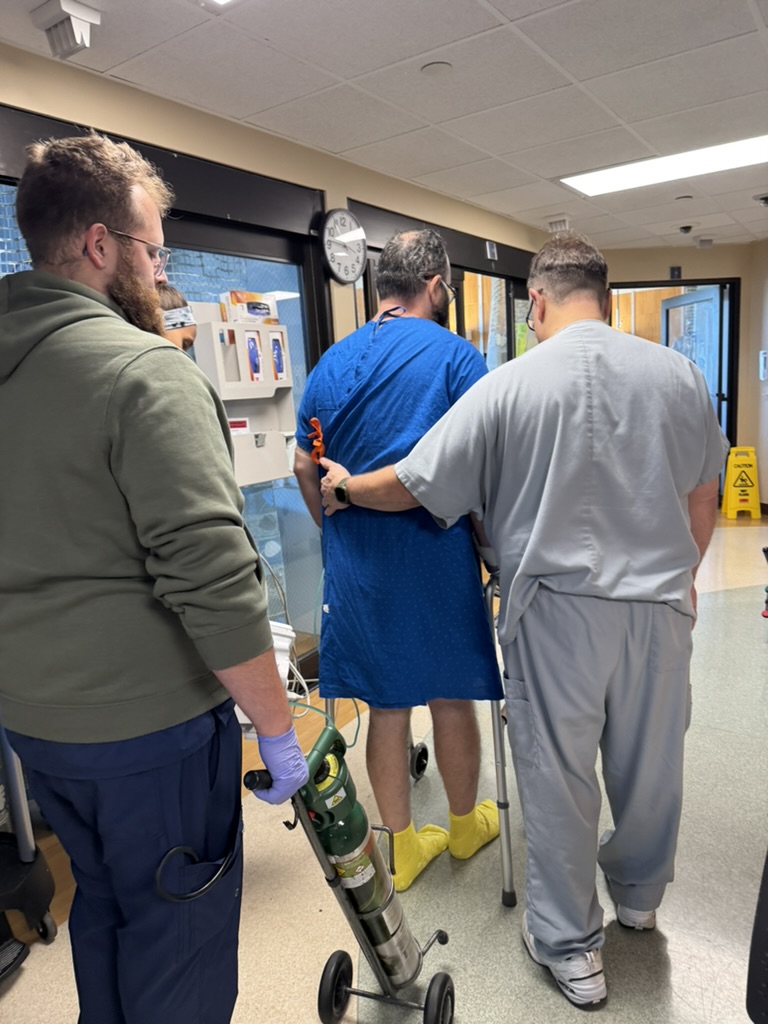
With physical therapy, a walker, and portable oxygen, Michael began learning to walk again after the coma—one supported step at a time.
Use “View ICU photos” above to close this gallery.
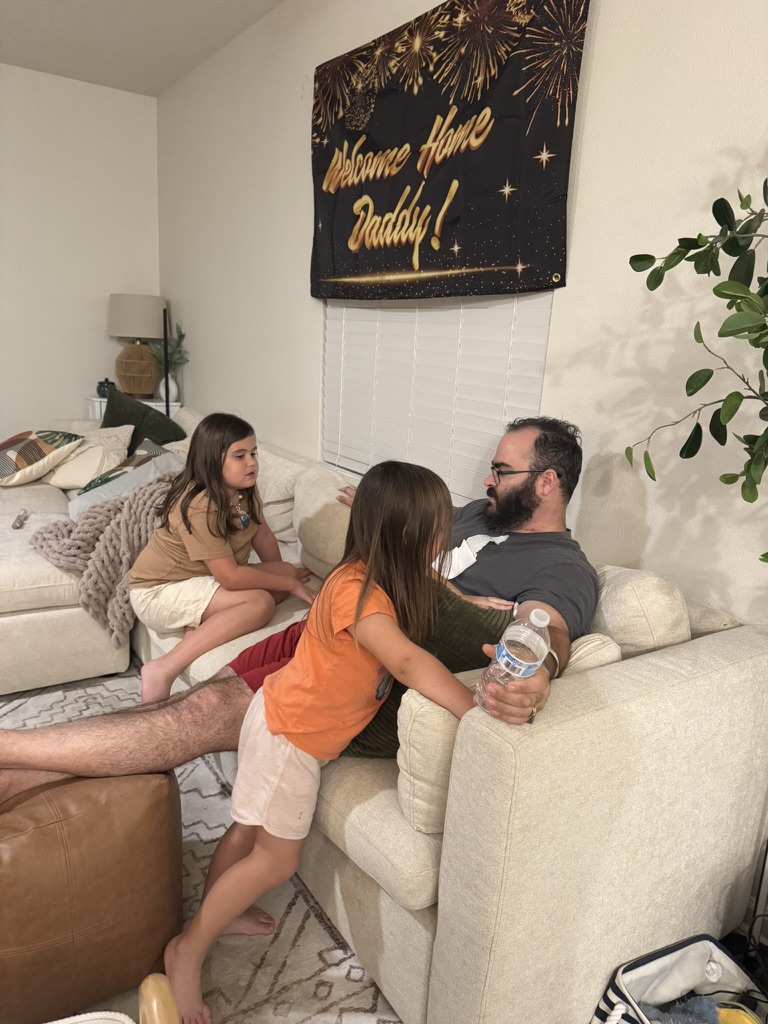
His daughters gathered beside him beneath a “Welcome Home Daddy!” banner. Returning home brought the family together as they began navigating life after intensive care.
Recovery continued within the routines and relationships of home.
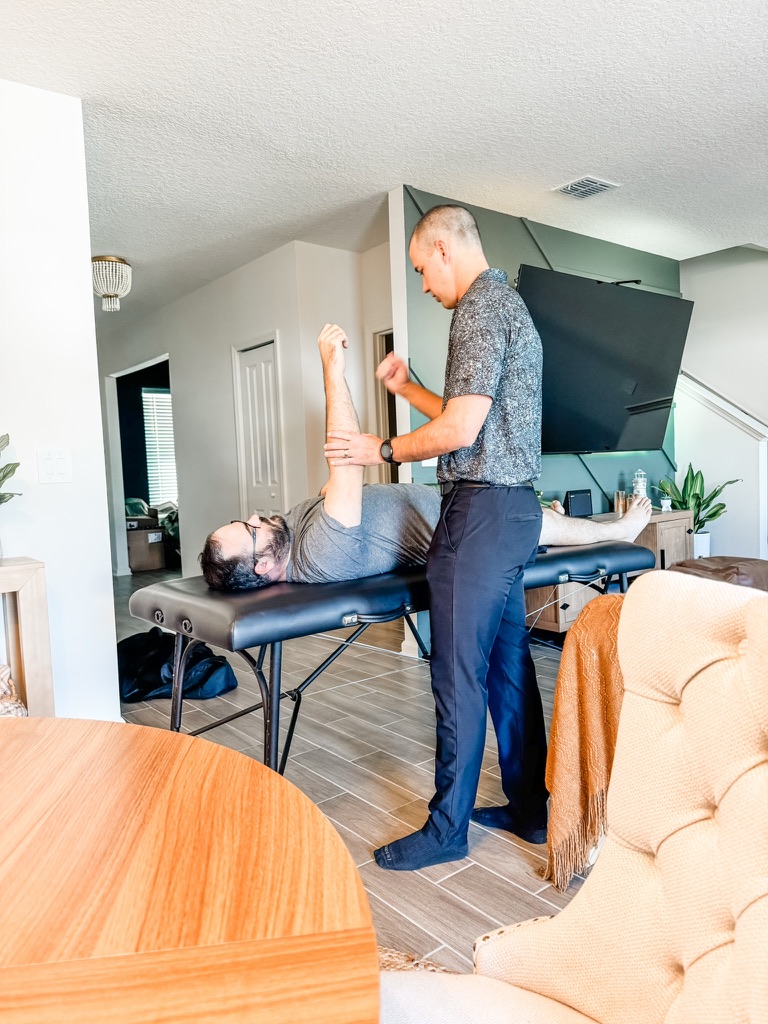
Physical therapy at home became part of the ongoing work on his shoulder and arm. Recovery required time, support, and repeated effort beyond hospital discharge.
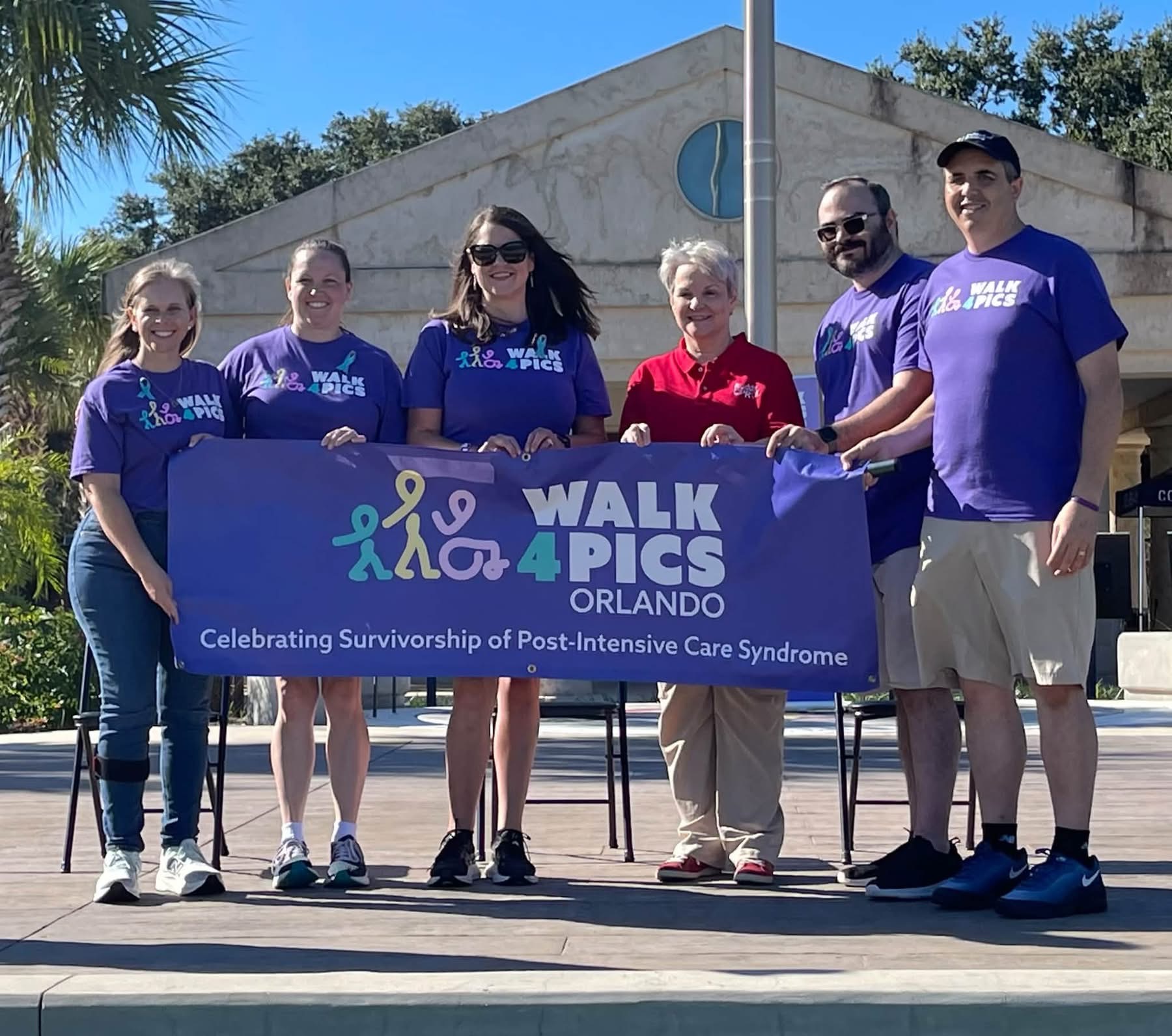
At Orlando’s Walk4PICS, Michael joined fellow survivors and advocates to raise awareness and build connections. His experience continues to shape the Life After ICU Initiative.
Explore Orlando Walk4PICS →Michael Paul Patrick, JD · Founder, Life After ICU Initiative
Author, speaker, and critical illness survivor advocate
September 26, 2026
PICS panelist
Contributed the patient and survivor perspective to a panel on post-intensive care syndrome and recovery following critical illness.
May 2026
Patient advocate speaker
Shared lived experience of critical illness and recovery with the critical-care community.
September 26, 2026
Survivor speaker
Shared his ICU survival and recovery story at the Orlando community awareness event.
Founder
Leads a patient-led initiative focused on PICS awareness, education, storytelling, survivor and caregiver connection, and collaboration across the critical-care community.
2026
Sponsor & planning committee member
Supported planning and sponsorship to raise awareness of post-intensive care syndrome and connect survivors, families, and supporters.
2026
Featured patient advocate
Participated in an ATS web video sharing the lived experience of critical illness and recovery.
February 2026
Podcast guest
Discussed ARDS survival and life following intensive care in an interview available through ARDS Alliance on YouTube.
A personal account of critical illness, ICU survival, and its aftermath.
A continuation of the Life After Trilogy exploring recovery and life following critical illness.
Keiser University · In progress
Barry University School of Law
Nearly a decade of client advocacy, with experience as a chief operating officer and managing attorney.
PICS and ICU survivorship; ARDS recovery; medical trauma; ICU delirium and memory; family and caregiver experience; identity after critical illness; peer connection; and the transition from hospital discharge to long-term recovery.
Updated September 2026
A Life After ICU Initiative Podcast
Hosted by Michael Paul Patrick, Surviving Discharge will bring together survivors, caregivers, clinicians, and researchers to explore recovery after critical illness.
Planned conversations include PICS, ICU memories, family experiences, physical recovery, identity, and the gaps survivors encounter after discharge. The opening episode, “The Eight Days I Don’t Remember,” will begin with Michael’s own story.
For awareness, resources, and community connections, contact Michael Paul Patrick.
Please avoid sending medical records or sensitive health information. This contact is not a clinical or emergency service.